


Updated September 16, 2026
The commercial building landscape keeps shifting, with elevated interest rates, changing tariffs, unpredictable material costs, and a tighter labor pool all shaping how projects get planned and priced. Through it all, the goal stays the same: deliver value-driven projects without budget-breaking surprises. Weaver Commercial Contractor (WCC) stays focused on exactly that, drawing on the trending technologies, materials, and strategic approaches that genuinely help our customers.
With a vast commercial portfolio, we also recognize that not every building decision should be made based on current industry trends (in fact, we've renovated a few spaces over the years to cover up the ones that didn't age well). Even so, we're already putting the trends that matter to work in our process. Here are several worth watching unfold through 2026 and into 2027.
It's also worth remembering that no two industries build the same way. The retail, healthcare, office, faith-based, and educational projects that fill much of our portfolio each come with their own requirements, which is why a builder who understands both your region and your specific building type will always serve you better than one working from a generic playbook.
Design technology keeps evolving and enhancing the industry, but don't underestimate the need for good design itself as a foundation. Finding a contractor to execute your vision probably isn't a challenge. Securing an expert designer/builder who actually listens to your organization's needs and creates a facility to meet them can be.
WCC uses a "design-build" approach and works with you from the beginning design phase through completion. Instead of bidding on a design created by another party, our customers benefit from single-source accountability that cuts out the middleman. We use our industry-specific experience to your advantage, helping you maximize the functionality of your design and find cost-saving alternatives. Our 3D renderings show you what your building will look like inside and out, eliminating confusion and giving you the chance to request changes well before construction begins.
What's newer is how much faster information now moves through that early phase. Artificial intelligence and real-time data tools are increasingly used to sharpen estimates, flag scheduling risks, and pressure-test budgets before a shovel hits the ground. Used well, they don't replace experienced builders. They help us spot problems early, before they turn into costly changes. It's a streamlined approach that lets us foresee concerns and make changes early, when the conventional bid process would only add delays by sending everyone back to a third party for a new design.
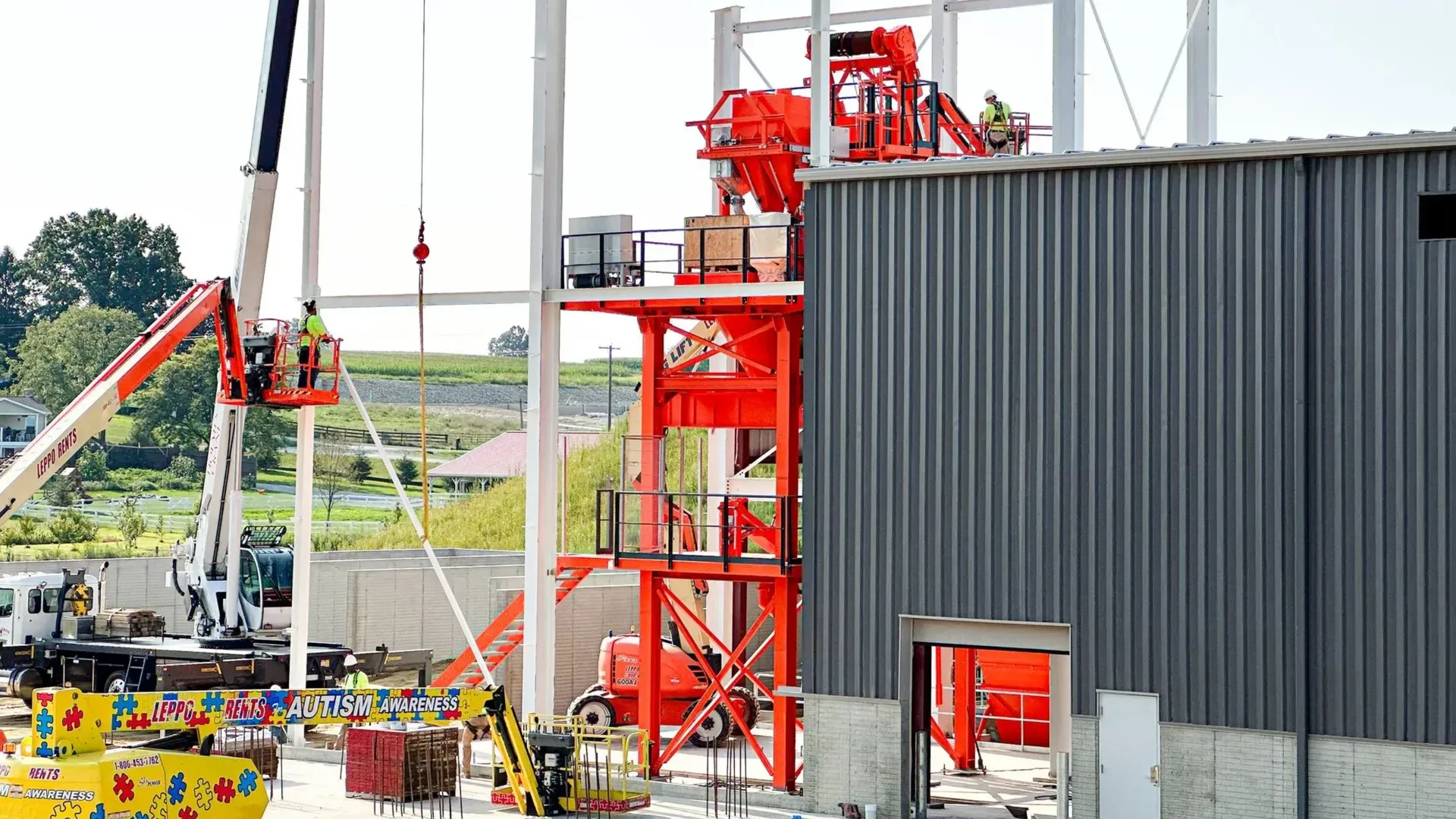
Metal building systems remain popular in commercial construction because they're durable yet attractive and energy efficient, and cost effective to both build and maintain. The Metal Building Manufacturers Association has reported steady growth in metal building shipments, with continued gains expected in office, retail, and governmental facilities alongside their long-standing popularity for industrial buildings and warehouses.
WCC is firmly on board with this trend. We earned a spot on the Top 100 Metal Builder List in the 2019 edition of Metal Construction News (58th for Top Metal Builders by Tonnage), and from food processing to manufacturing to ministry, you'll find plenty of completed metal building projects on our website.
The bigger shift now is how far prefabrication has spread beyond warehouses. Wall panels, MEP assemblies, bathroom pods, and structural frames are increasingly built in controlled factory settings and delivered ready to install. Industry data suggests prefabrication can cut building-envelope installation time dramatically, by as much as 80% in some cases, while modular approaches have been reported to save around 30% on cost and 50% on schedule on average. In a market where cost control and schedule certainty are everything, the engineered, factory-built approach we've long championed is only becoming more valuable.
Building Information Modeling (BIM) moves the building process into a virtual space, and what was once a differentiator is now the coordination standard for any complex project. While 3D renderings show clients the finished spaces, BIM reveals the concealed mechanical systems, including HVAC, plumbing, and fire suppression, within the ceilings, floors, and walls. That helps everyone working on the project understand how those systems fit together and interact, avoiding conflicts before construction begins and reducing costly changes that hit both the budget and the schedule.
The newer wrinkle is the digital twin: a living model that carries project intelligence past the ribbon-cutting into long-term facility management. For owners who plan to operate a building for decades, such as schools, churches, medical facilities, and financial centers, that ongoing value is real, not just a construction-phase convenience.
It's a little disappointing that keeping the timeline counts as a trend, but not every commercial builder delivers on it. Between lingering supply-chain quirks, tariff-driven material swings, and steady demand, holding a project to its schedule takes real discipline, and it matters enormously to customers who've already waited.
WCC combats timeline issues with Construction Manager At Risk, a cost-effective, time-conscious alternative to the traditional design-bid-build process. CM at Risk lets the client choose the construction manager before the design is complete, so budget challenges and supply or other issues get identified early, before they become setbacks. Clients usually select someone loyal to their organization, often through repeat business. The approach centralizes the work under a single contract with a guaranteed maximum price, while the client keeps a separate architect/engineer relationship, and the CM and A/E work together to execute the design.
This collaborative process strengthens the working relationship and motivates the CM to keep subcontractors, and the whole project, moving. It can reduce design changes, elevate construction quality, improve communication, speed up the schedule, and solidify cost expectations.
The labor squeeze is one of the defining pressures of this cycle. Industry estimates point to a need for hundreds of thousands of additional construction workers each year just to keep pace with demand, while retirements continue to thin the ranks of experienced tradespeople.
In response, jobsite technology is stepping in as a labor multiplier. Drones speed up site surveys and progress tracking, robotic material handlers reduce repetitive strain, and wearable exoskeletons support workers during lifting and overhead tasks, improving both safety and retention. We expect steady, practical adoption here rather than overnight change. The point isn't to replace skilled people but to let them focus on skilled work and stay safer doing it. Just as important is the human side: cross-training crews across trades and upskilling staff to run digital tools keeps a project moving when specialists are hard to find.
Green design and construction is the trend that keeps on trending, and it has shifted from a luxury to a baseline expectation. Sustainable materials once landed in a higher price range, but as they've gone mainstream and energy costs have climbed, the long-term math increasingly favors them. Net-zero energy targets, high-efficiency systems, and lower-carbon materials are now written into project goals as often for their operating savings as for their environmental benefit.
Contractors almost have an obligation here. Buildings account for a large share of national energy use and greenhouse gas emissions, and thoughtful design/build practices can move those metrics through steps like:
Adaptive reuse deserves special mention as more owners rethink underused office and retail space. Converting and modernizing existing structures saves material, shortens timelines, and often makes the most financial sense. And green buildings deliver human benefits too, with occupants reporting fewer headaches and respiratory issues, and daylight designed into a space improving both mental health and productivity.
Not every trend on this list belongs on every project, and part of our job is telling you honestly which ones will add value to yours and which are just noise. What stays constant through every market cycle is the fundamentals: clear planning, realistic budgets, steady communication, and quality work that lasts for decades.
Weaver Commercial Contractor designs, builds, and renovates commercial buildings for a wide variety of industries. Between understanding each industry's needs and the unique demands of your project, we apply the trends that matter into a building plan tailor-made for you.
Contact us today to discuss your upcoming project and learn more about how Weaver Commercial Contractor is the solid partner you need.



If you have questions about commercial construction planning, delivery methods, or how to approach your next project, we are glad to talk through your goals and considerations.
CONTACT US